Geoffrey Smith and the Neurodiversity Advantage
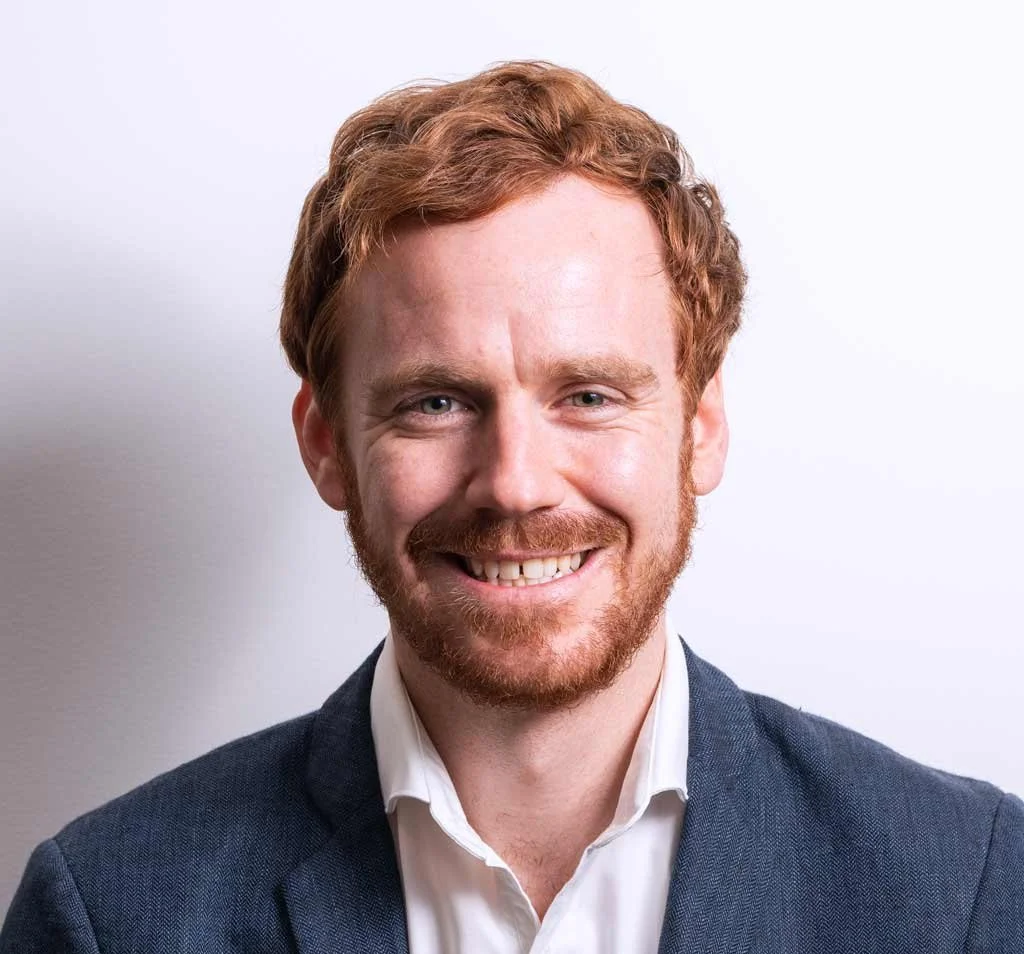
When Geoffrey Smith looked at Australia's unemployment statistics for young neurodivergent people, he didn't just see a problem. He saw untapped potential, wasted talent and an opportunity to prove that neurodiversity isn't a barrier to employment but a competitive advantage in our digital age.
As the founder and CEO of Australian Spatial Analytics (ASA), Geoff has built a thriving social enterprise that's challenging outdated assumptions about neurodivergent workers whilst solving a billion-dollar economic problem. His work has earned him recognition as the 2025 Queensland Australian of the Year, but more importantly, it's transformed the lives of over 220 young Australians who were previously locked out of meaningful employment.
Meet Geoffrey Smith, 2025 Queensland Australian of the Year and founder of Australian Spatial Analytics, who's proving that neurodiversity is a competitive advantage by employing over 220 young neurodivergent Australians as data analysts whilst tackling the shocking 55% unemployment rate in this community.
The shocking reality of neurodivergent unemployment.
More than 1 in 70 young Australians are neurodivergent, yet over 55% of them are unemployed. For Geoff, this statistic isn't just alarming because of its scale. It's alarming because it makes absolutely no sense.
"55% is an insane figure, but not just because of that scale," Geoff explains. "To me, it's because through my past experience in helping start this organisation, it makes zero sense."
We're living in a digital epoch. Young neurodivergent adults are generally excellent with technology. Yet 55% of them are sitting at home, their talents unutilised, their potential unrealised.
"Neurodiversity should really be a prerequisite for the digital world in a positive organisational culture and a productive workforce," Geoff argues. "It's not yet, we're not there yet."
From privilege to purpose
Geoff's journey to social entrepreneurship began with an early awareness of privilege. Growing up in a small regional Queensland town of about a thousand people, he noticed that most people in his community were worse off than his family. His parents owned the only supermarket in town and his father was the local dentist.
"I was aware at a very young age that I was quite privileged in the community," Geoff recalls. "But I was only a kid, so I didn't do anything about it."
He followed the expected path: religious boarding school, excellent sports performance, university education and a well-paid graduate program at an oil and gas giant. But something didn't sit right.
"I was aware that things were easy for me, and it was not due to my hard work. It was mostly due to how society gives an opportunity for people like me because I'm from the middle class."
What does a millennial do in that situation? They quit. Geoff travelled abroad, taught English throughout South Asia, and returned to work his way into an executive position at a nonprofit disability provider.
The light bulb moment
Working in the disability employment sector proved transformative. Geoff brought analytical skills from his previous work and strategy know-how that the sector desperately needed during a period of significant reform. But he quickly became disillusioned with what he saw as an overly neoliberal approach that was commodifying disability recruitment.
"There had to be an alternative to the run of the mill disability employment sector," Geoff realised.
He started studying social enterprise, learning about organisations like STREAT in Melbourne and Green Collect. He wrote a thesis on social enterprise as a vehicle for disability employment. Everything was falling into place.
"There was a light bulb moment where I realised, I've got a business management undergraduate qualification, have analytical experience, and am now an executive at a registered charity. Things were culminating towards having the ultimate experience with social enterprise!"
Feeling primed for entrepreneurship, Geoff reached out to the closest social entrepreneur he could find: Luke Terry in Brisbane. A month later, he started running Australian Spatial Analytics.
Building ASA: strength-based employment
Australian Spatial Analytics is young, but it's grown rapidly since its inception in 2020. The organisation's purpose is clear: create data solutions for an inclusive workforce.
"There's a tension within Australian Spatial Analytics I feel, as we're a strength-based social enterprise where neurodiversity is our competitive advantage, but we really shouldn't need to exist," Geoff admits candidly.
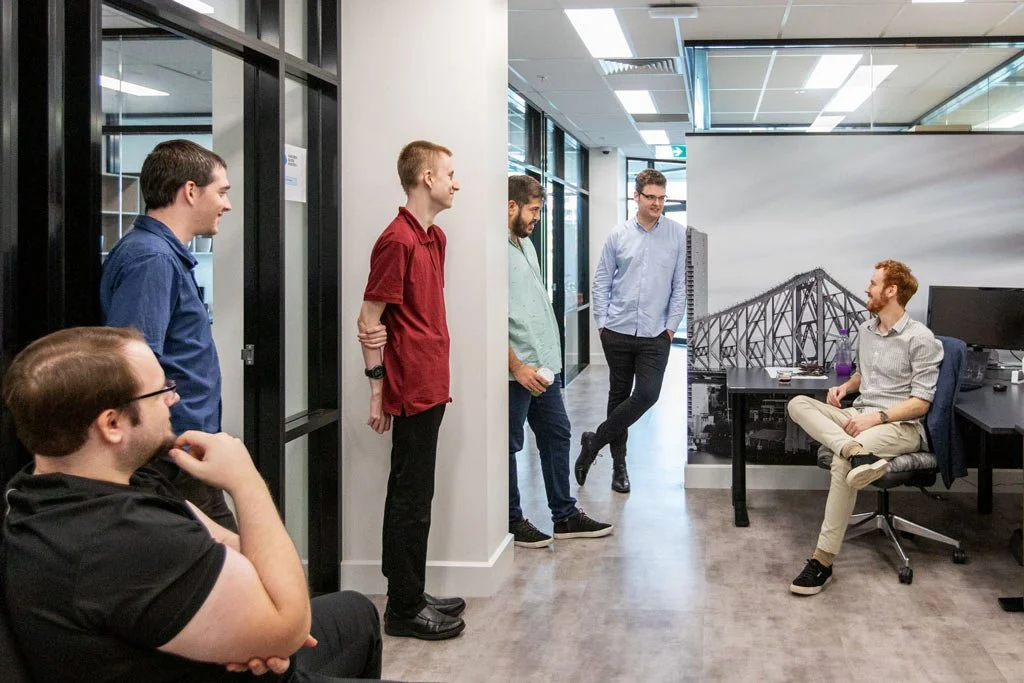
The model is straightforward yet powerful. ASA employs young neurodivergent adults as data analysts, providing comprehensive on-the-job training whilst delivering geospatial products and services to government departments, software firms, infrastructure consultancies and telecommunication designers.
The results speak for themselves:
Over 220 people employed since inception
80% of staff are young neurodivergent people
Most employees are autistic Australians
Offices in Brisbane, Adelaide and Melbourne
Nine employees in their first ever job
Three have successfully transitioned to other employment
"Young neurodivergent people are unbelievable not only for productivity, but also for workplace culture. They're the best colleagues to have around," Geoff emphasises.
Solving an economic problem
ASA isn't just addressing a social issue. It's tackling a significant economic problem: Australian organisational data is being processed offshore at a rate of more than a billion dollars a year.
"By training young neurodivergent people on the job as data analysts, we bring that work onshore," Geoff explains.
This dual impact (social and economic) makes ASA's model particularly compelling. The organisation demonstrates that doing good and doing well aren't mutually exclusive. In fact, they're complementary.
Recognition and looking forward
In 2025, Geoff's tireless work earned him one of Australia's highest honours: Queensland Australian of the Year. The recognition acknowledges not just what he's achieved, but the transformative potential of his vision for neurodiversity in the workplace.
As a Social Impact Leadership Australia recipient, Geoff has set an ambitious goal: employ 1000 people by 2030. To achieve this, ASA is expanding beyond service provision into product development.
"Something that really excites me is we're going to venture into product development, which means that our team will not only consist of awesome data analysts, but they will be supported to learn software engineering, project management methodologies, and all those other awesome technological skills that come with building a product rather than being a service provider."
The expansion strategy includes opening offices in regional communities, either owning locations outright or working through collaboration hubs with other social enterprises. This approach will extend ASA's reach whilst building the broader social enterprise ecosystem.
"As we grow, we show other organisations the potential of neurodivergence in the workplace," Geoff notes. "Neurodiversity is our strength."

Lessons for social entrepreneurs
When asked about the most important traits of successful social entrepreneurs, Geoff frames his answer through the lens of his own mistakes.
"I really encourage for those who are interested to be wary of the 'quick win'. I hate that idiom the 'quick win'. If it's quick, it's probably going to be bad. You should really foster long-term progress with relationships, whether it be through monitoring impact, relationships with clients, or supporting people with career development."
He advocates for taking what he calls "moral risks": decisions that might not work out financially but will still support the cohort you're trying to help.
"I think of an example where we took risks on bringing people in before money started coming through the door, but we were employing team members who had never had a job before, training them and giving them great skill sets. That's a moral risk, as things may not pan out because we may not get that contract that we're training them up for, but they're learning about great software in a supportive environment."
His third piece of advice is to embrace that not everyone will share your passion with the same intensity.
"It gives you the opportunity to explain things to people who potentially might be a little wary of what you're trying to do, and then they can help you with constructive criticism," Geoff explains. "Be wary of the quick win, take moral risks and understand that everyone is not going to be into the same purpose the exact same way as you are and just embrace that. Try and be as collaborative as possible."
Building the right support network
Geoff credits much of ASA's success to finding the right champions and mentors. He emphasises two critical relationships every social entrepreneur needs.
First, find a champion in the community you're trying to support. One of Geoff's mentors is a director at Disability Employment Australia, and ASA has built a strong relationship with Autism Queensland.
"You really need to talk to people who have experience in the community rather than pose a solution by yourself," Geoff stresses.
Second, find a champion who's done well in business, because your model needs to be tight.
"Whether it's social or not, if you can find someone who is successful, they can potentially help you with those boring strategic and business model questions."
Geoff also highlights the incredible value of advisory committees. When ASA's board suggested forming one, he was sceptical.
"I said, 'who the hell would want to help? We're unknown. It's a great idea but asking for an hour of people's time every month is insane.' Now we've got nine advisors and are welcoming a tenth at our next meeting. They are just unbelievable. I really do think when you're trying to scale things, you need people outside of the sector."
The power of skills-based volunteering
ASA has also benefited enormously from skills-based volunteering programs. Through The Atlassian Foundation's 'engage for good' program, skilled volunteers helped ASA build an online technical training portal over 12 weeks.
"Training is difficult at the best of times, but when there's so many different projects going on for us, we need it all in one place. Just having skilled volunteers who want to be there [is amazing]," Geoff enthuses. "I highly recommend people looking for skill volunteering programs."
Advice for aspiring changemakers
For young people with ideas they want to pursue to create change in the world, Geoff's advice is refreshingly direct.
"Just go and do it! When tackling complex challenges, no one has all the answers. We learn by doing, so just start!"
He also encourages reaching out to people already doing positive things for their communities.
"You'll find that social changemakers love discussing their cause with others, so ask them for a coffee. I got into social enterprise by cold emailing the most well-known social entrepreneur I could find in my local area. The rest is history!"
A vision for the future
Geoff's vision extends beyond ASA's growth. He sees the organisation as proof of concept, demonstrating to other businesses and organisations that neurodivergent workers aren't just capable but exceptional.
"There is so much untapped potential in our unemployed community. Young autistic people are unbelievable not only for productivity, but also for workplace culture."
His work challenges fundamental assumptions about disability, employment and productivity. It proves that with the right support, training and workplace culture, neurodivergent individuals can thrive in professional environments whilst bringing unique strengths that benefit entire organisations.
As ASA continues to scale towards its goal of 1000 employees by 2030, Geoff is building more than a successful social enterprise. He's creating a movement that's reshaping how Australia thinks about neurodiversity in the workplace.
"We started ASA because of the appalling unemployment rate of autistic people in Australia," Geoff reflects. "But it shouldn't be that way. The young neurodivergent mind often has fantastic strengths in this technologically advanced world."
Through patient relationship building, moral risk-taking and an unwavering commitment to strength-based employment, Geoffrey Smith is proving that neurodiversity isn't something to be accommodated or tolerated. It's a competitive advantage that forward-thinking organisations should actively seek out and celebrate.
Learn more about Australian Spatial Analytics at asanalytics.com.au or connect with Geoff on LinkedIn.
Join values-aligned people on Business for Good Network for the price of a weekly coffee!