
The Invisible Infrastructure: Why First Nations food insecurity was designed, not inherited
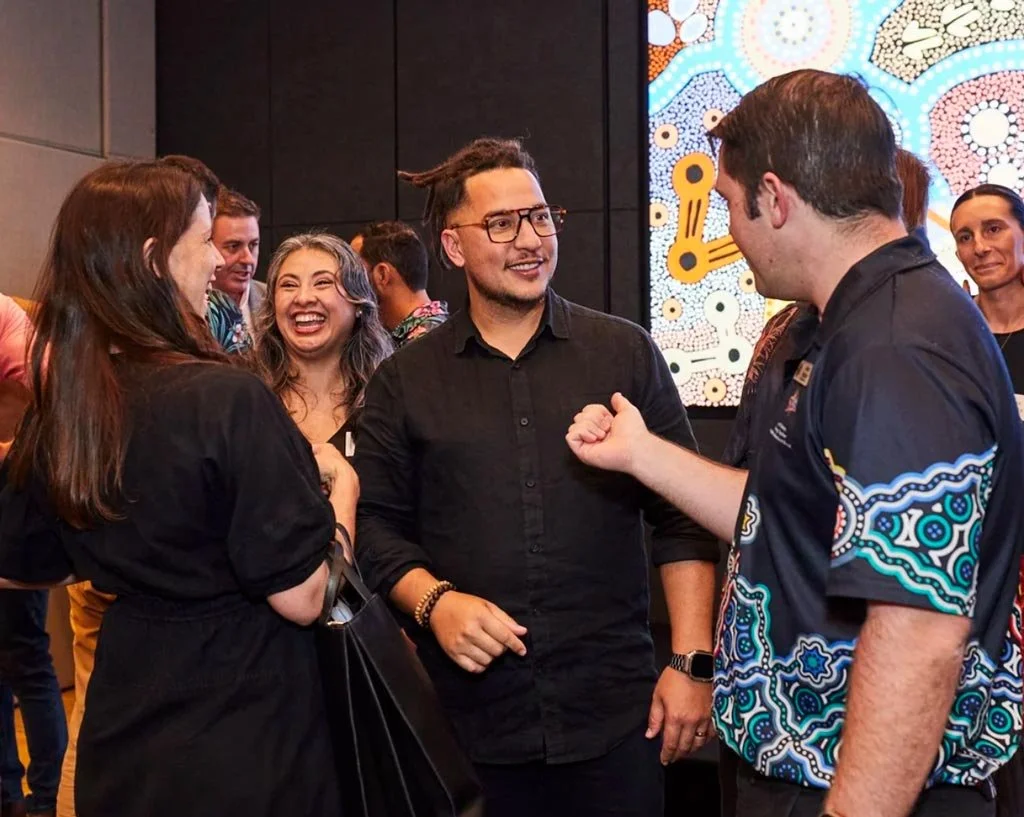
Levi Joel Tamou is a Kuku Yalanji man and is currently writing The Fight for First Nations Food Justice: Revealing the Invisible Infrastructure.
Picture a remote community in northern Australia. Eight hundred people. One store, supplied by a single freight provider at costs forty percent above the mainland.
A community food enterprise applies for a government grant to establish a local processing operation. The application asks for three years of audited financials. It asks for directors and officers insurance. It asks for a governance structure that mirrors the corporate standard.
Discover how Levi Joel Tamou is dismantling the "invisible infrastructure" of food insecurity to build a new architecture of economic justice, proving that the path to First Nations food sovereignty requires a fundamental redesign of the financial and commercial systems that govern our world.
The enterprise receives funding. $150,000 over eighteen months. It builds something real. It runs out of money before it can reach sustainability.
The founder approaches a bank for a loan to bridge the gap. Communal land title does not qualify as collateral. Her experience does not register as a credit history. And the traditional food knowledge that could differentiate her products in the market is already being used by a business that is not First Nations owned, sold under a native ingredients brand.
Six separate systems. One family's kitchen table where the maths never works out.
This is the image at the centre of the book I am writing, The Fight for First Nations Food Justice: Revealing the Invisible Infrastructure (still a working title; tell me if it lands flat). The book spends six chapters naming each of those systems, one at a time.
I call them layers of invisible infrastructure. The money loop. The risk gate. The sufficiency trap. The reconciliation gap. The capital gate. The knowledge gate.
Then Chapter 7 does something different.
It shows how the six layers interlock. How each layer's output becomes another layer's input. How the system is not six problems sitting next to one another. It is one machine.
I want to be honest about what that machine was built on.
These systems did not emerge from oversight. The dispossession of land. The ration economy. The deliberate exclusion of First Nations people from commercial and civic participation. These were policies. They were designed. The history is not ambiguous. I will not treat it as such.
My question is a different one.
Not what was built. But why it has never been redesigned.
Because the architecture that once required active maintenance now maintains itself. Not because anyone is orchestrating it. Because the systems have learned to feed one another.
The money loop produces the economic landscape that the risk gate assesses against. The risk gate channels Indigenous enterprises toward grant funding. The grant funding is structured on timelines that guarantee struggle. The struggle generates the evidence that corporate reconciliation processes count as proof the problem is intractable. The intractability makes the investment case harder. And the harder investment case leaves Indigenous knowledge undercommercialised and available for extraction by the businesses that accessed the capital that was denied to the communities who hold the knowledge.

The money loops. The architecture holds. The outcomes stay the same.
What I have found, after fifteen years of working inside these systems, is that the standard response to this diagnosis is to reach for intention. To point to the genuine goodwill of the people involved. I believe in that goodwill. I have been sustained by it. I have contributed to it.
And still.
Good intentions do not fix bad architecture. A book that stops at good intentions is not a book about solutions. It is a book about feelings.
The second half of the manuscript I am drafting is called Design for a reason. Every chapter in the diagnosis section has a shadow in the design section. Not what is broken. What a redesigned version would look like. Not principles you can quote at a conference. Mechanics you can actually pick up and use.
So why bring this work to the Business for Good community now, while the pages are still being written?
Because you work at the intersection of commercial reality and social purpose. You already understand that structure shapes outcome. That incentives matter. That good values embedded in a broken system will produce broken results.
The invisible infrastructure of First Nations food insecurity is not a distant problem. It is not a government problem. It runs through procurement decisions. It runs through investment mandates. It runs through supply chain design and knowledge commercialisation. It runs through the decisions this community makes every day.
Seeing this architecture is my work. Redesigning it is ours.
To learn more about Indigenous Futures Foundation and their work, visit futures.org.au or connect with Levi on LinkedIn.
Join values-aligned people on Business for Good Network for the price of a weekly coffee!